Your eyes give out before the day does? The problem may not be your eyes.
Researchers at the National Eye Institute spent five years studying what actually protects vision as we age. The answer has a name — and it isn't eye drops.
You hold your phone farther away to read a text. You blink hard after two hours at the computer. At night, oncoming headlights bother you more than they did five years ago.
If any of that sounds familiar, it isn't just "getting older." It's a specific biological process — one with a name, and one that nutrition research has studied for two decades.
Does this sound like you?
- You hold text farther away to bring it into focus
- Your eyes burn or feel heavy by the end of the day
- Night driving has become less comfortable
- Your eyes feel dry after hours on screens
- You need more light to read than you used to
Checked three or more? Then it's worth understanding what's behind it — because new glasses correct the symptom without touching the cause.
What's actually happening inside your eye
At the back of your eye sits an area about the size of a grain of rice called the macula. It's what lets you read, recognize faces, and see fine detail. Everything you see sharply passes through it.
The macula has a brutal job: it takes in light all day, every day, for a lifetime. And at the cellular level, light creates oxidative stress — the same process that turns a sliced apple brown in the open air.
Your body defends against that with a layer of protective pigment made of two carotenoids: lutein and zeaxanthin. Together they act as a natural filter, absorbing blue light before it reaches the sensitive cells underneath.
That's why eyes tire faster after 45. It isn't that the eye "got old." It's that its shield got thinner.
The largest study ever run on nutrition and vision
From 2006 to 2012, the National Eye Institute — the U.S. government's official eye research body — ran the AREDS2 trial, published in the medical journal JAMA in 2013.
What they tested was exactly this: whether lutein and zeaxanthin, alongside zinc, copper and vitamins C and E, make a difference to macular health over time.
Their findings reshaped nutritional guidance for eye health worldwide — which is why nearly every serious vision supplement today is built on that same foundation.
Where iGenics fits in
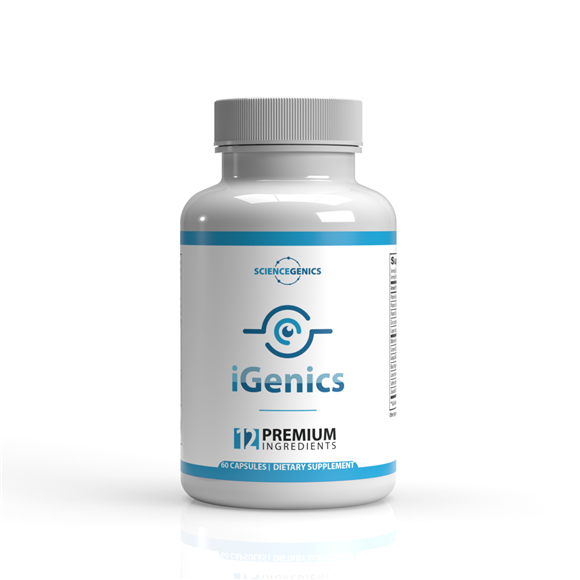
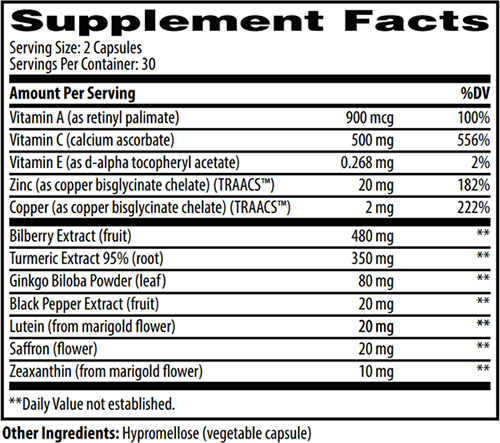
iGenics, made by Ohio-based Science Genics, is built on that AREDS2 foundation — lutein, zeaxanthin, zinc, copper and vitamins A, C and E — and adds four well-studied botanicals: bilberry, ginkgo biloba, saffron and turmeric with black pepper for absorption.
That's 12 actives in a single bottle. It's why it costs more than a drugstore multivitamin — and also why the two aren't in the same category.
What's in the bottle — and what each part does
Real doses, taken from the official label. One serving equals 2 capsules.
"But I already take a multivitamin"
That's the fairest question of all. The difference comes down to dose and focus — a standard multivitamin is designed to cover the basics for your whole body, not to sustain the macula.
| Typical multivitamin |
iGenics | |
|---|---|---|
| Lutein at AREDS2 dose | ✕ | 20 mg |
| Zeaxanthin | ✕ | 10 mg |
| Concentrated bilberry | ✕ | 480 mg |
| Saffron | ✕ | 20 mg |
| Balanced zinc + copper | Sometimes | ✓ |
| Built specifically for vision | ✕ | ✓ |
| Money-back guarantee | ✕ | 180 days |
What to expect, honestly
A nutritional supplement isn't a drug, and it doesn't work overnight. With nutrients like these, what's typically observed is a gradual process:
1
Saturation phase
Your body starts rebuilding pigment stores. Dramatic change in this window is rare — and anyone promising it is selling you a story.
2-3
Perception phase
This is the window where people most often report more comfort on screens and less fatigue at the end of the day.
4-6
Maintenance phase
The goal shifts from noticing a difference to sustaining the protection. That's why the larger kits make the most sense.
Individual results vary with age, diet and how consistently the supplement is taken.
Choose your supply
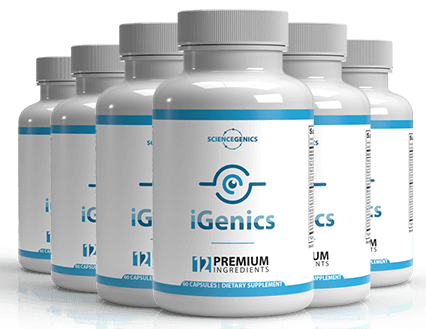
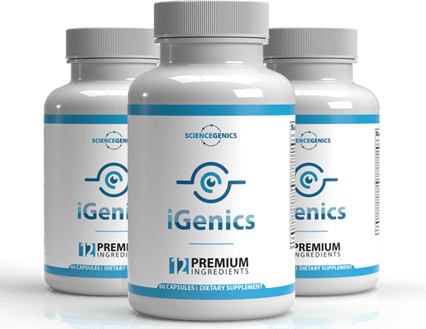
One-time purchase on the manufacturer's official site. No subscription, no recurring charges.

180 days to decide, without pressure
That's six full months of guarantee. If at any point you feel it wasn't worth it, just email support and get 100% of your money back — even with the bottles already opened.

Questions people ask before buying
How do I take it?
Two capsules a day, ideally with a meal — lutein and zeaxanthin are fat-soluble, so they absorb better alongside some dietary fat. Each bottle holds 60 capsules, a 30-day supply.
Will it replace my glasses?
No — and be skeptical of anyone who says otherwise. iGenics is nutritional support for eye health. It does not correct refractive error, treat eye disease, or replace regular eye exams.
Are there side effects?
The formula is vegan and stimulant-free. Some people report mild digestive discomfort at first, which usually settles when taken with food. If you take blood thinners, talk to your doctor first — ginkgo biloba can interact with them.
Is this a subscription?
No. It's a one-time purchase with no auto-ship and no recurring billing. You buy the supply you choose, and that's it.
How long does shipping take?
Orders ship from the manufacturer in the United States. Delivery estimates are shown at checkout based on your address.
What if it doesn't work for me?
You have 180 days to request a full refund, even with opened bottles. Support contact details come with your order.
One-time purchase, no subscription